Plots in Palencia - buy, sell or rent easily

Find plots by category in Palencia (Province)


Plots for sale with most wanted features


Latest publications of land and houses for sale in Palencia (Province)


 +3
+3
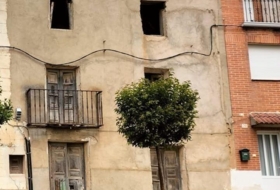

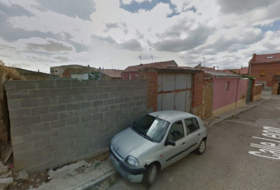
Where to buy land in Palencia
The average price of urban land, just over €65/m², in the province is the fourth cheapest in Castilla y León. The cheapest land in Palencia is found, for the most part, in the northern part of the territory. Therefore, the towns with the lowest prices are Grijota with the minimum value of €0.60/m², followed by Revilla de Pomar with €7.20/m² and Cervera de Pisuerga with €23.10/m². Other towns that have the cheapest farms, in terms of average value, are Palencia itself or Guardo.
On the contrary, Palencia capital brings together the highest plot prices. With a higher value of €150/m², it is followed by Cisneros with €100/m² and Tariego de Cerato with €93.8/m². Other towns with high land costs would be Quintana, Fuentes de Valdepero and Aguilar de Campoo, with an average value of €47/m² and €72/m². With developable land, its situation is very similar to urban land, with a large agglutination near the capital of the province.
A landscape influenced by climate and orography
It has an extension of more than 8,000 km² and a population of about 161,000 inhabitants. They highlight in it a technical industry that is largely based on the agricultural resources that are produced on this land.
In the north of the province, there is an oceanic or mountain climate (in the highest areas); while in the south, it becomes the continental Mediterranean with oceanic influence, with lower temperatures and copious rainfall.
The territory is made up of a varied landscape. Much of it is a plateau flanked by the Pisuerga and Carrión valleys, to which are added the plains of Tierra de Campos and Cerrato. In the north, more mountainous, there is boreal vegetation, with beech and oak trees, while in the south there are holm oaks, poplars, and meadows.
An area of 136,000 hectares is devoted to forest exploitation, the vast majority of which are publicly owned.
The granary of Spain
The Castilian-Leonese agro-livestock production is the leader in many products at a national level and its agro-industry is the third in terms of the generation of Gross Added Value (GVA) in Spain.
The province of Palencia has a long agricultural tradition (especially cereal-wheat, rye, barley, and oats) and livestock. Although the services sector predominates (58% GDP), agricultural activities (14% GDP) and industrial activities (19% GDP) are of great importance.
It is known as the granary of Spain since 84% of the land is dedicated to rainfed crops, whereas cereals occupy 64% of the arable land. The primary sector is specialized and is supported by the agri-food industry.
Likewise, 7% of the land is devoted to legume harvesting, 10% to fodder, and 9% to industrial crops. In addition, vegetables, fruits, olive trees, vines and tubers are planted.
It is in the mountain areas where livestock is adapting better, and beef bears the Denomination of Guarantee Mark "Carne de Cervera".
On the other hand, the production of cow's and sheep's milk is mainly intended for the agri-food industry in León and Burgos. Sheep wool is also produced and poultry farming, and beekeeping are practised.
The institutions carry out support programs for new farmers, with grants, subsidies, training, etc. The result of this performance is reflected in the gastronomy, where its typical products stand out, such as suckling lamb churro, meat from Cervera, sausages from Palencia or desserts such as blinds from Saldaña and arms from San Lorenzo.
An experienced industrial sector
Palencia's industrial activities constitute about 7% of those in the Castilian-Leonese region. The industrial and agricultural sectors are outstanding pillars of its economy.
Primary resources are processed through a modernized agri-food industry, providing added value. This added to the extensive experience, forged over the years, generates high productivity. Likewise, the metallurgical and automobile industries account for a large volume of activity (45%), followed by manufacturing (27%), the extraction and transformation of energetic minerals together with the chemical and paper industry (12%), as well as energy (traditional and alternative) and water (6%).
The business fabric is diversified and made up of SMEs, micro-SMEs, as well as leading companies in the automobile industry and agribusiness.
In addition, the area has a good communications network and is a place of transition between the Bay of Biscay and the interior. It has an excellent geostrategic location that allows access to different markets.
Specialized food and automotive products are exported around the world, achieving very good acceptance and excellent results in foreign trade.
The province has a good supply of industrial land (more than 25 industrial estates) with excellent infrastructures at a very competitive price. It is located mainly in a rural environment, whose logistics hub links Valladolid with Burgos and Palencia with Santander.
In short, in the province of Palencia, industry and agriculture stand out, even though the economic strength is also based on the services sector. One of the advantages offered by this land when betting on it is the low value of industrial and urban land, as well as the facilities provided to invest in them.